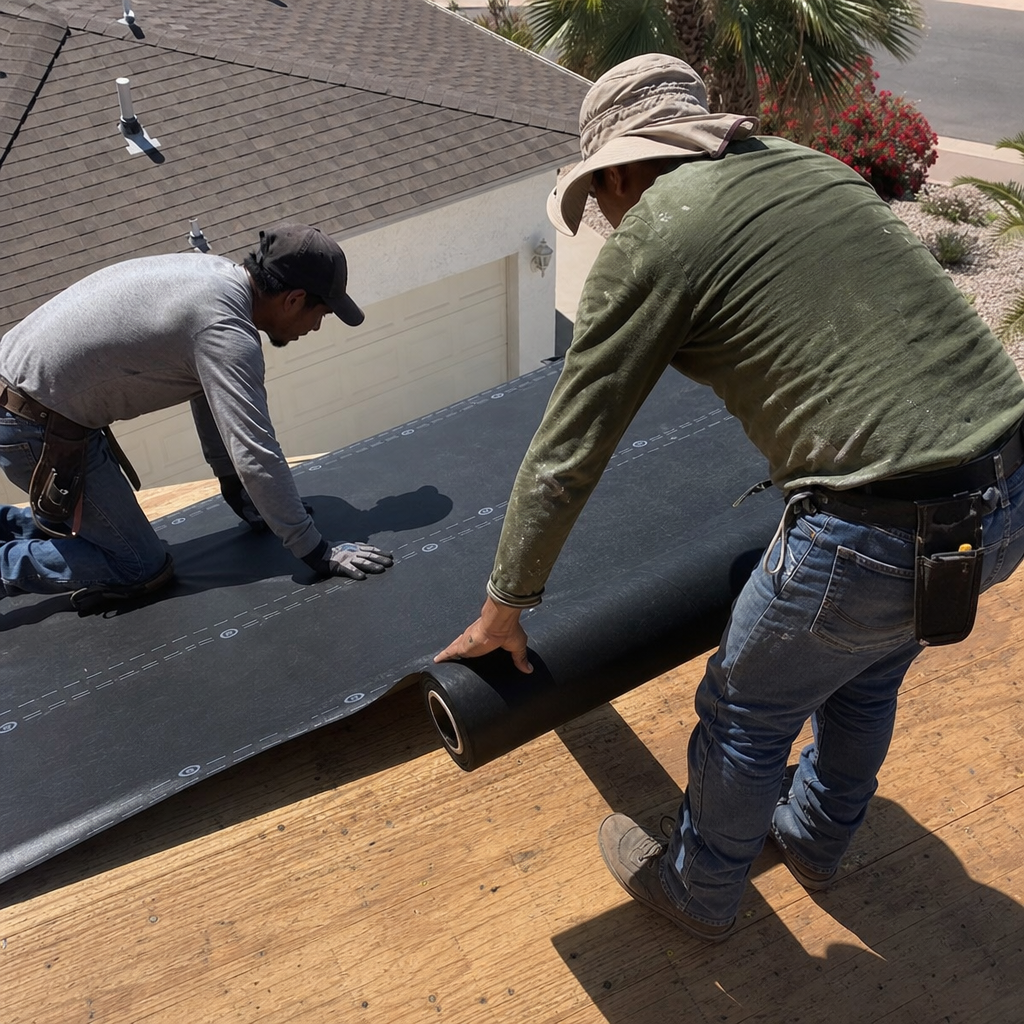
Roof Replacement & Installation in Las Vegas, NV
A full roof replacement in Las Vegas typically runs $8,500–$22,000 depending on roof size, material, and whether the underlayment requires a complete tear-off — which, in Las Vegas’s 1990s–2000s housing stock, it usually does. If you’re in Summerlin, Rhodes Ranch, or North Las Vegas and you haven’t had your underlayment inspected since the home was built, there’s a real chance your tile looks fine from the street while the substrate beneath it has already failed. Call (725) 237-7255 for a free estimate — Santos Cruz will come out and tell you exactly what’s there.
Why All Star Roofing Company Las Vegas Is Las Vegas’s Preferred Roof Replacement & Installation Company
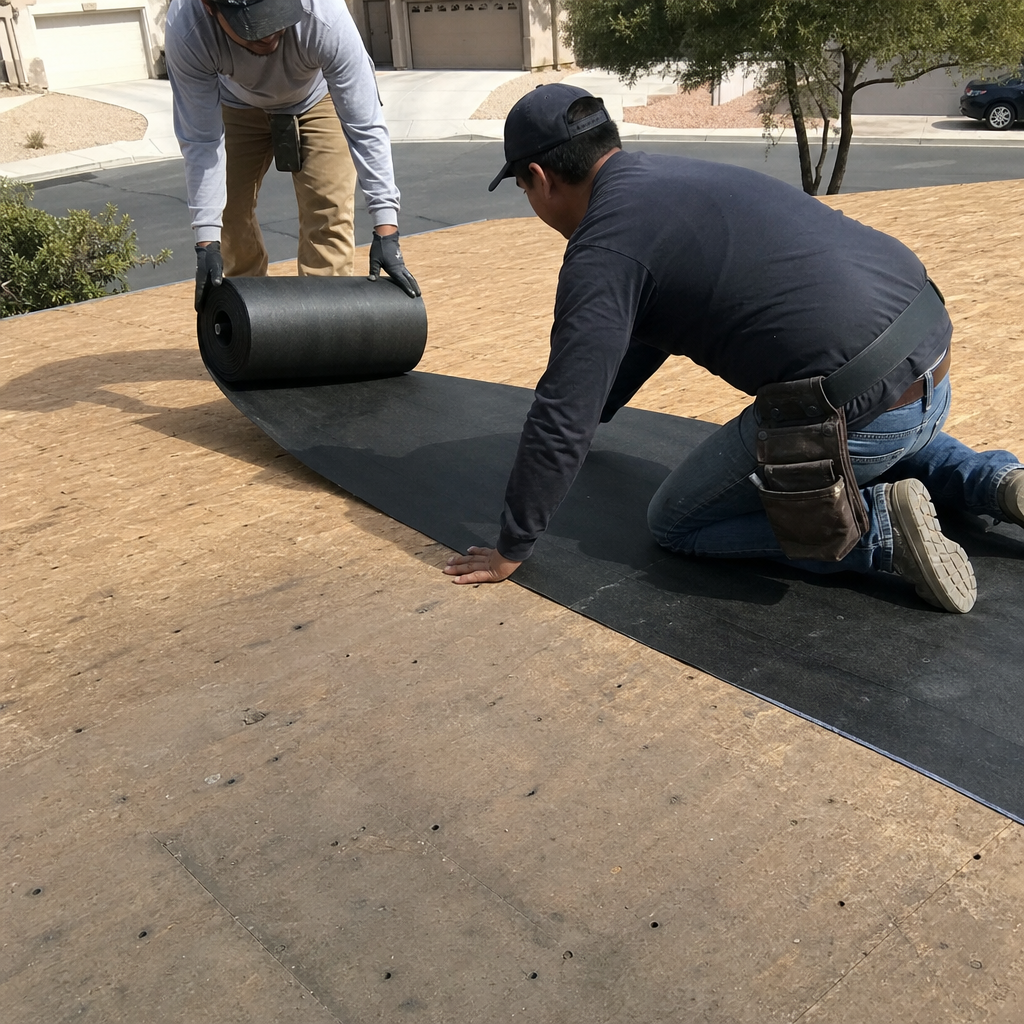
Santos Cruz has been on Las Vegas roofs for 22 years — not managing crews from an office, but working the jobs himself as Lead Technician. When you call All Star Roofing, Santos is the person who shows up, pulls the tiles, inspects the deck, and writes the scope. That direct accountability is exactly what Las Vegas homeowners are looking for after dealing with large franchises that send a different subcontractor every time. Our Roof Replacement & Installation team is built around that model: one experienced lead, consistent results, no handoffs.
Nearly 120 Las Vegas homeowners have left us a 4.9-star average across 118 verified reviews — not because we promise the lowest number, but because we show up, document what we find, and do the work right. Serving Las Vegas for over two decades means we know the neighborhoods, the housing eras, the common failure points, and which materials hold up in this specific climate. That local pattern recognition is the difference between a contractor who gives you a quote and one who actually understands your roof’s history before the first tile moves.
Our Roof Replacement & Installation Services in Las Vegas
Tile Roofing
Concrete barrel tile is the dominant roofing material across Las Vegas’s master-planned communities — Summerlin, Rhodes Ranch, Green Valley — and it’s where the majority of our replacement work happens. The tile itself is often salvageable; what fails is the 15-lb felt underlayment beneath it, desiccated by 110°F summers and 294+ sunny days annually. We work with Boral and other concrete tile systems, salvaging original tile where possible and installing new synthetic underlayment rated for Las Vegas’s UV exposure cycle — so the new roof system is built to last, not just to pass inspection.

Full Roof Replacement
A full tear-off and replacement is frequently the only responsible option on Las Vegas homes built between 1990 and 2007, once the underlayment condition is assessed. We document the deck condition before we scope the job — photographs, measurements, written findings — so you understand exactly what’s failing and why a full replacement is warranted, not just recommended. Santos handles the tear-off inspection personally so nothing gets missed before new material goes down.
Flat Roofing
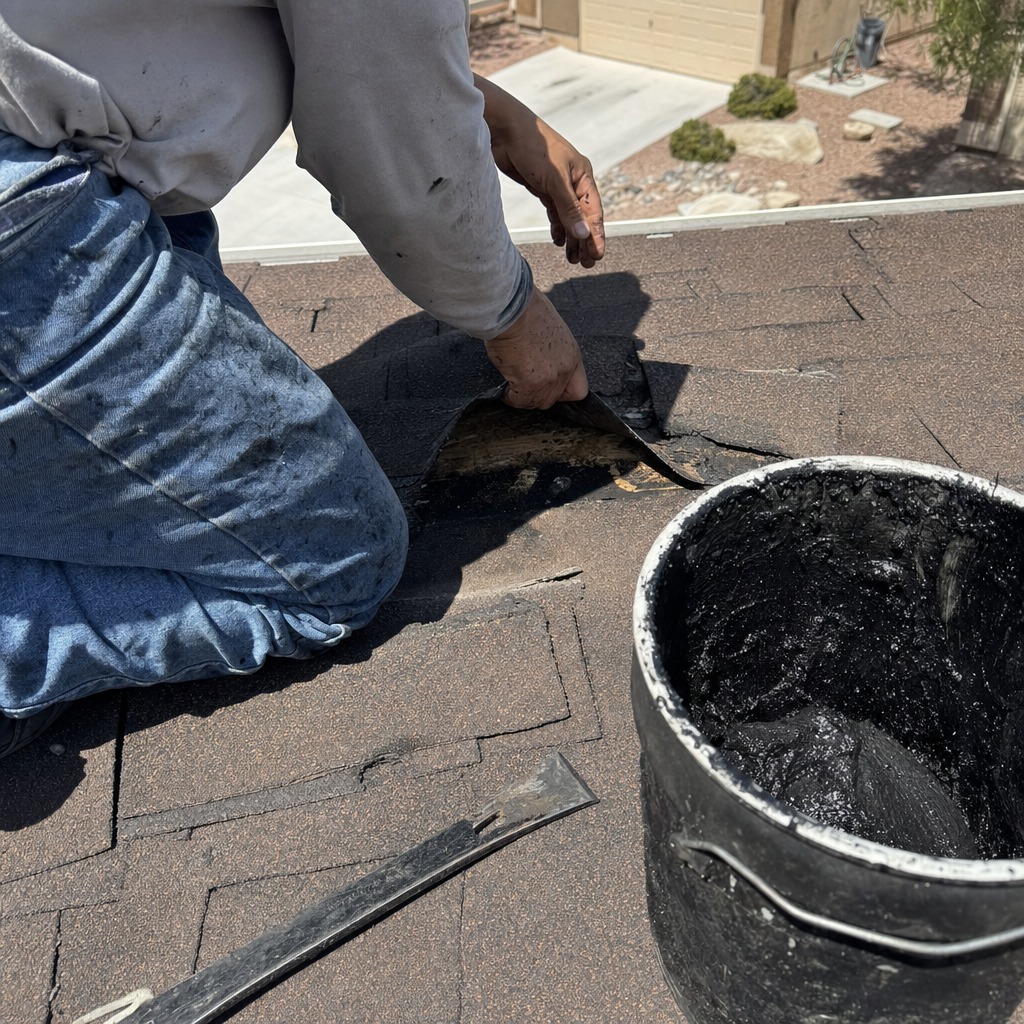
Many Las Vegas homes built during the 1990s boom include flat or low-slope roof sections over rear additions, covered patios, or detached casitas — and those sections behave entirely differently than the main tile field during a monsoon burst. We install and replace TPO, EPDM, and modified bitumen systems on residential flat sections, with drainage details designed for Las Vegas’s intense but infrequent rainfall pattern. A flat section that drains fine most of the year can overwhelm its scuppers in under 20 minutes during a July microburst; we size and slope accordingly.
Asphalt Shingles
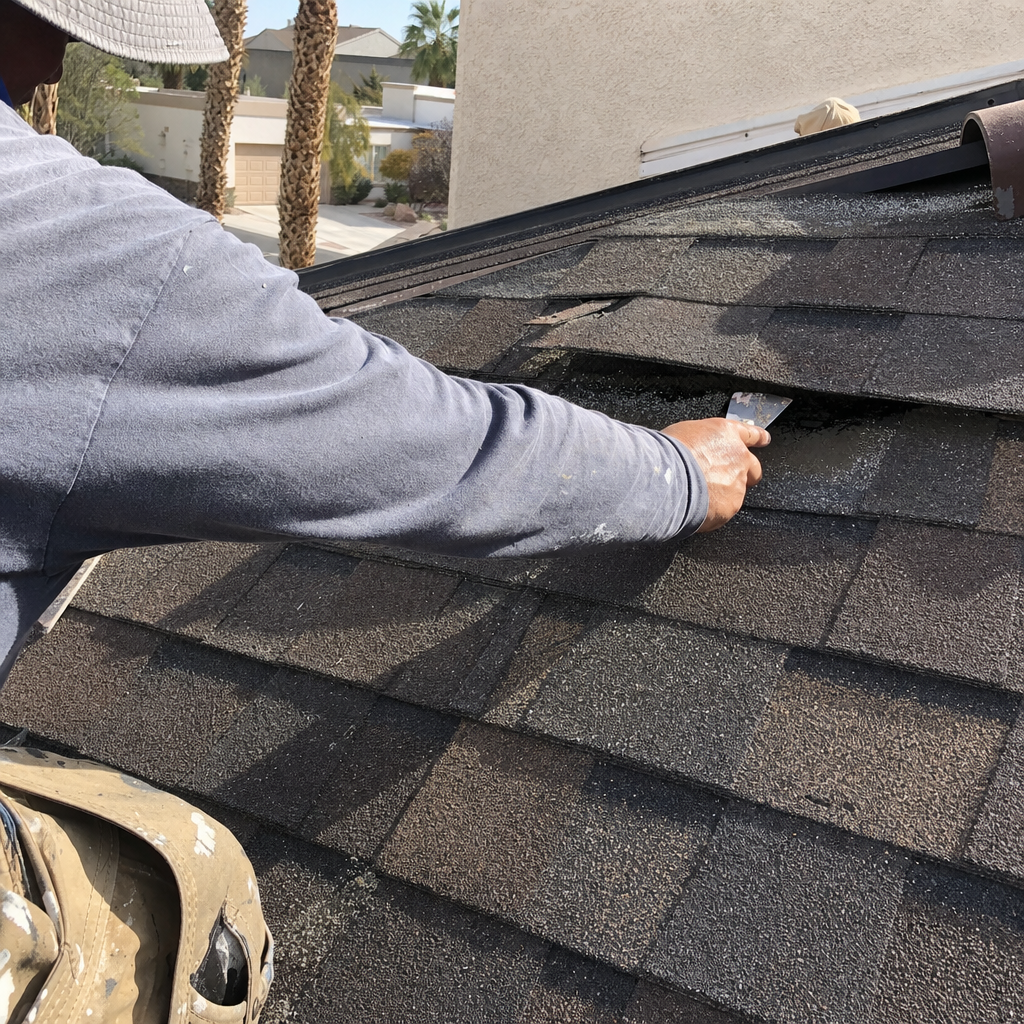
Asphalt shingles appear on a portion of Las Vegas’s housing stock, particularly on steeper-pitch homes and newer infill construction where concrete tile wasn’t the builder’s specification. In Las Vegas’s climate, not all shingle products are equal — we install lines from GAF, CertainTeed, Owens Corning, IKO, Atlas, and Tamko, and we steer customers toward products with algae-resistance ratings and Class 4 impact ratings appropriate for the monsoon hail exposure this valley occasionally sees. The right shingle for Las Vegas is not necessarily the same one that sells well in Phoenix or Denver.
New Construction
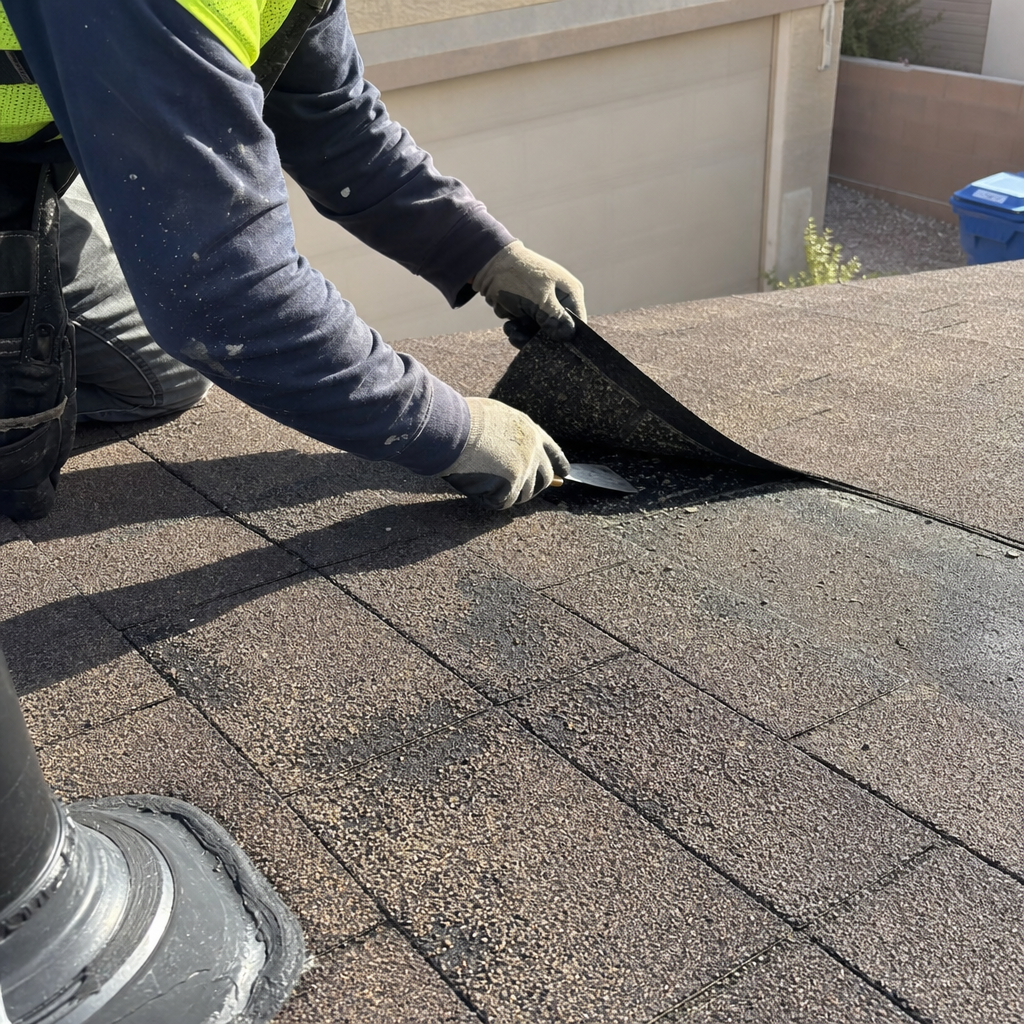
We install roofing systems on new construction across the Las Vegas Valley, working directly with general contractors and custom home builders on both tile and low-slope applications. New construction in Las Vegas requires underlayment and ventilation details that account for attic temperatures well above 150°F during summer — a detail that gets cut in production builds and costs homeowners in premature system degradation. We spec the system to the climate, not to the minimum the permit requires.

Metal Roofing
Standing-seam and metal panel roofing has grown steadily in Las Vegas over the past decade, particularly among homeowners replacing aging tile systems who want a substrate that won’t desiccate under extreme UV. Metal roofing in Las Vegas’s diurnal temperature environment — swings of 35–45°F between day and night are common — requires properly engineered fastening systems that accommodate thermal expansion; we’ve seen cheaper installations crack sealants and back out fasteners within five years. Done correctly, a metal roof in Las Vegas is one of the most durable long-term investments available.

What happens when you call
- 1
A real person answersNo phone trees — you reach a local pro.
- 2
You get an upfront price rangeHonest numbers before anyone is dispatched.
- 3
A background-checked tech heads outLicensed & insured, dispatched right away.
- 4
You approve before work beginsNothing starts until you say go.
Trusted Brands We Service in Las Vegas
We work with seven major manufacturer lines — GAF, CertainTeed, Owens Corning, IKO, Atlas, Tamko, and Boral — which means our material recommendations are based on what’s right for your specific Las Vegas roof, not on what we happen to have in the truck. Boral concrete tile is particularly relevant across the 1990s–2000s tracts in Summerlin and Rhodes Ranch, where salvaging original tile over new synthetic underlayment is often the most cost-effective path. Having access to multiple lines also means faster material turnaround for Las Vegas customers — we’re not waiting on a single supplier when your roof is open after a storm.
Common Roof Replacement & Installation Problems We See in Las Vegas Homes
- Powdered 15-lb felt underlayment beneath concrete tile. Clark County permitted 15-lb organic felt under barrel tile through much of the 1990s build-out, and Las Vegas’s UV intensity degrades that material two to three times faster than in moderate-climate cities. By the time a crew pulls the first tile on a 1998-built Summerlin home, the felt often crumbles in their hands — turning what the homeowner thought was a repair into a code-required full tear-off across the entire deck.
- Monsoon drainage failures on low-slope and flat sections. Las Vegas roofs are engineered around roughly four inches of annual precipitation, so when a July monsoon drops an inch in 30 minutes, flat sections and low-pitch tile courses get overwhelmed fast. Water backs up under tile courses, finds every failed underlayment seam, and enters the structure before there’s any visible surface damage — the first sign is a wet ceiling patch, often days after the storm.
- Voided underlayment warranties on cosmetically intact tile systems. Intense diurnal temperature swings and UV exposure in the Las Vegas Valley degrade asphalt-based substrates well before the tile above shows any visible wear. Many homeowners are carrying manufacturer underlayment warranties that technically voided years ago — the tile looks fine, so they assume the system is fine, but the warranty gap means no coverage when failure finally surfaces.
- Improperly detailed flat-to-tile transitions on additions and casitas. The junction between a flat roof section and the main tile field is one of the most common leak points on Las Vegas homes built during the 1990s boom. Builder-era flashing at these transitions was frequently underbuilt for cost reasons, and after 20-plus years of thermal cycling, those details crack, separate, and allow water intrusion that tracks horizontally before showing up as an interior stain well away from the actual breach.
The Las Vegas Underlayment Problem — What Every Homeowner in Summerlin, Rhodes Ranch, and North Las Vegas Should Know
This is the defining issue in the Las Vegas roofing market right now, and it’s worth explaining clearly. During the 1990s construction boom, Clark County’s building code permitted 15-lb felt underlayment beneath concrete barrel tile — a standard that was widely used across Summerlin, Henderson, Rhodes Ranch, and North Las Vegas tract developments. That underlayment has a rated service life that assumes a moderate climate. Las Vegas is not a moderate climate. With 110°F+ summer highs, intense UV radiation across 294+ sunny days annually, and diurnal temperature swings that stress every material on the roof daily, organic felt degrades at a pace that effectively ages the substrate two to three times faster than the manufacturer’s rating assumed.
The result is tens of thousands of homes across the Las Vegas Valley where the concrete tile above looks completely intact from the street — no cracked tile, no missing pieces, no visible damage — while the underlayment beneath has literally turned to powder. Homeowners don’t know it until the July monsoon arrives and the first real rainfall in months finds every failed seam at once.
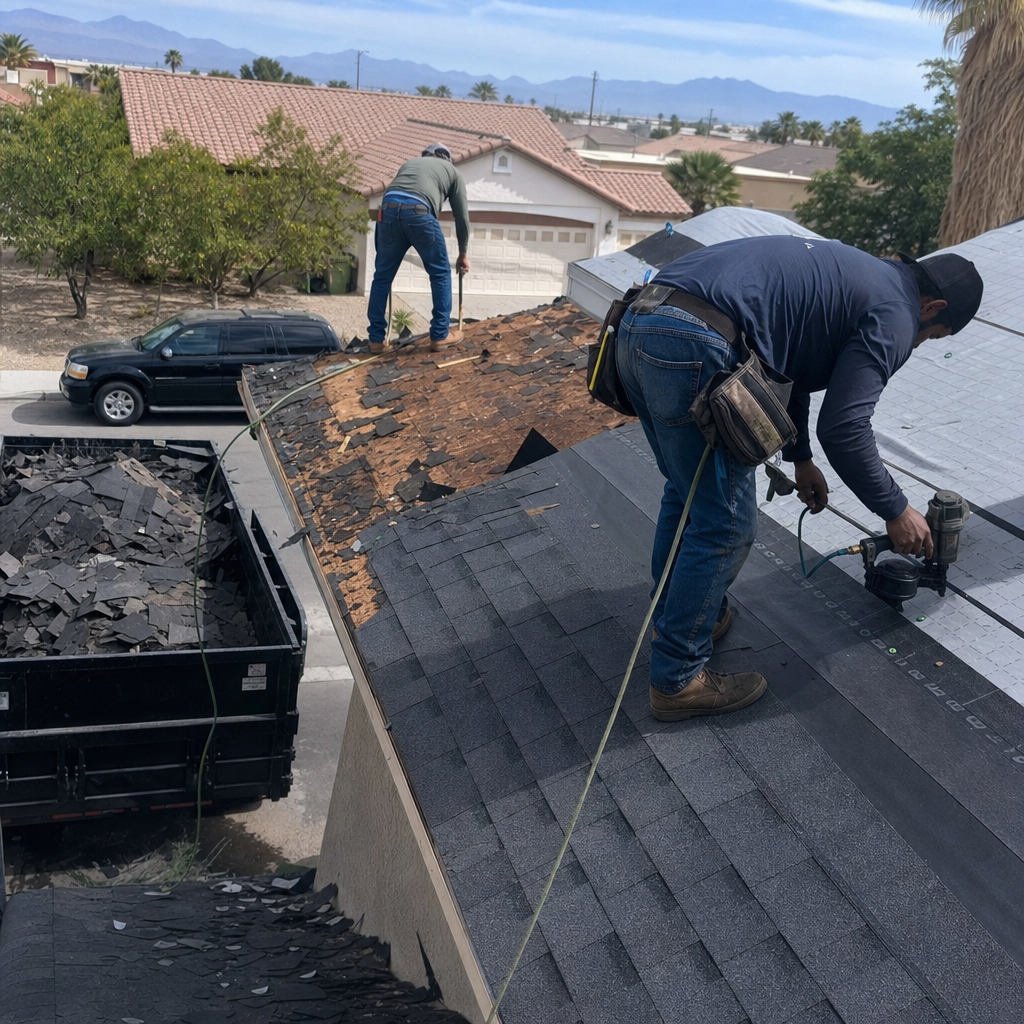
We were called to a 1998-built barrel-tile home in Rhodes Ranch after the homeowner noticed a wet ceiling patch following the first July monsoon burst. The tile on the roof looked perfect. When we pulled sections near the hip line, the 15-lb felt crumbled in our hands like dry newspaper. We documented the condition across the entire 2,200-square-foot deck before presenting the homeowner with a mandatory full tear-off scope — salvaging roughly 80% of the original Boral concrete tile for re-installation over new synthetic underlayment rated for Las Vegas’s UV exposure cycle. The tile above was fine. The system beneath it had failed years earlier without a single visible signal.
If your Las Vegas home was built between 1990 and 2007 and you’ve never had the underlayment condition confirmed by someone who actually lifted the tile to look, a visual inspection from the ground tells you almost nothing about what’s actually there.
Pricing for Roof Replacement & Installation in Las Vegas, NV
Here are honest ranges for the Las Vegas market based on typical project scopes:
- Concrete tile re-roof (tear-off + new synthetic underlayment, reusing salvaged tile): $9,000–$16,000 for a 1,800–2,400 sq ft home
- Full tile replacement (new tile + underlayment): $14,000–$22,000 depending on tile selection and roof complexity
- Asphalt shingle replacement: $8,500–$13,500 for a standard Las Vegas home
- Flat roof section replacement (TPO/EPDM): $4.50–$8.00 per square foot installed
- Metal roofing installation: $16,000–$28,000 for a full residential system
The biggest variable on Las Vegas tile roofs is underlayment condition — if the deck is clean and the tile is 80%+ salvageable, costs stay toward the lower end. If the deck needs repair work or the tile loss is higher, costs move up. Santos will walk the roof, document what’s there, and give you a written scope with a firm number before any work begins. Free estimates, no obligation. Call (725) 237-7255 to schedule.
We Also Serve Cities Near Las Vegas
Beyond Las Vegas proper, our replacement and installation crews regularly work in Spring Valley, North Las Vegas, Sunrise Manor, and Summerlin South — all communities with significant concentrations of 1990s–2000s concrete tile homes facing the same underlayment issues we see throughout the Las Vegas Valley. Same crew, same standards, same direct involvement from Santos on every job.
Serving Las Vegas, NV — Our Local Coverage Area
We’re based in the Las Vegas area and know this community well. Use the map below to see our service coverage — if you’re nearby, we can almost certainly help.
FAQs — Roof Replacement & Installation in Las Vegas
Possibly yes, and the only way to know is to lift tile and inspect the underlayment directly. In Summerlin’s 1990s-built tracts, we regularly find 15-lb felt that has powdered completely despite tile above that looks pristine from the street. Once a crew lifts a tile and confirms powdered or friable underlayment across the deck, Clark County code requires a full tear-off — there’s no partial patch that legally restores the system. A ground-level visual inspection gives you zero information about underlayment condition. Call (725) 237-7255 to schedule an on-roof assessment — Santos will pull tile and show you exactly what’s there.
Yes, in most cases a significant portion of the original tile is salvageable. On typical Henderson and Las Vegas Valley tract homes, we recover 75–85% of the original Boral or standard concrete barrel tile for re-installation over new synthetic underlayment. Tiles that are cracked, chipped at the lug, or show structural damage get replaced; the rest go back down. This is almost always the most cost-effective path versus full tile replacement, and it preserves the look and profile that matches the neighborhood. We document salvage rates in the written scope so you know exactly what you’re getting before the job starts.
Las Vegas receives roughly four inches of rain annually, and the city goes months between meaningful precipitation — which means a failed underlayment seam can sit dry and invisible from October through June. The July–September North American Monsoon then delivers intense, short-duration rainfall events that saturate the roof surface faster than low-pitch drainage systems were designed to handle. That standing water finds every powdered seam, every failed flashing detail, every dried-out lap joint simultaneously, and drives into the structure all at once. The ceiling stain that appears after the first July storm isn’t new damage — it’s the sudden visibility of a system that has been silently failing for years under dry conditions.
Synthetic underlayment is the correct replacement for 15-lb organic felt on any Las Vegas re-roof. Specifically, we install synthetics rated for high-UV exposure and tested for the temperature cycling Las Vegas roofs experience — products from our manufacturer lines that carry explicit Las Vegas-climate ratings, not just baseline code compliance. Synthetic underlayment resists the desiccation that destroyed the original felt, doesn’t absorb moisture during monsoon events, and typically carries service-life ratings that are appropriate for the actual Las Vegas climate rather than a national average assumption. On North Las Vegas tract homes with low-pitch barrel tile, proper lapping and hip-line detailing on the new underlayment is critical — that’s where the original installations most commonly failed.
Yes, flat and low-slope sections are scoped and installed as a separate system from the main tile field. On Las Vegas homes with rear additions, covered patios, or attached casitas, the flat section typically uses TPO, EPDM, or modified bitumen rather than tile, and the drainage design has to account for the monsoon rainfall intensity this valley sees even though annual totals are low. The transition flashing between the flat section and the main tile field is also one of the most common failure points we find on Las Vegas homes built in the 1990s — builder-era details at that junction were frequently underbuilt and have since cracked from thermal cycling. We scope flat sections and tile sections together so nothing at the transition gets missed.
Schedule Your Free Las Vegas Roof Inspection
If your Las Vegas home was built before 2008 and has concrete tile, the single most useful thing you can do is have someone physically lift tile and inspect the underlayment condition. Not a drone pass. Not a ground-level look. An actual on-roof inspection by someone who knows what failed 15-lb felt looks like — because Santos has seen it hundreds of times across Summerlin, Rhodes Ranch, Henderson, and North Las Vegas, and he can tell you in 20 minutes whether you have a monitoring situation or a replacement situation. Call All Star Roofing Company Las Vegas at (725) 237-7255 to schedule a free estimate. Santos handles the inspection himself, gives you a written scope, and answers every question directly — no sales desk, no callbacks from someone who wasn’t on your roof.
Reviewed by Santos Cruz, Owner and Lead Technician at All Star Roofing Company Las Vegas, serving Las Vegas, NV since 2003.