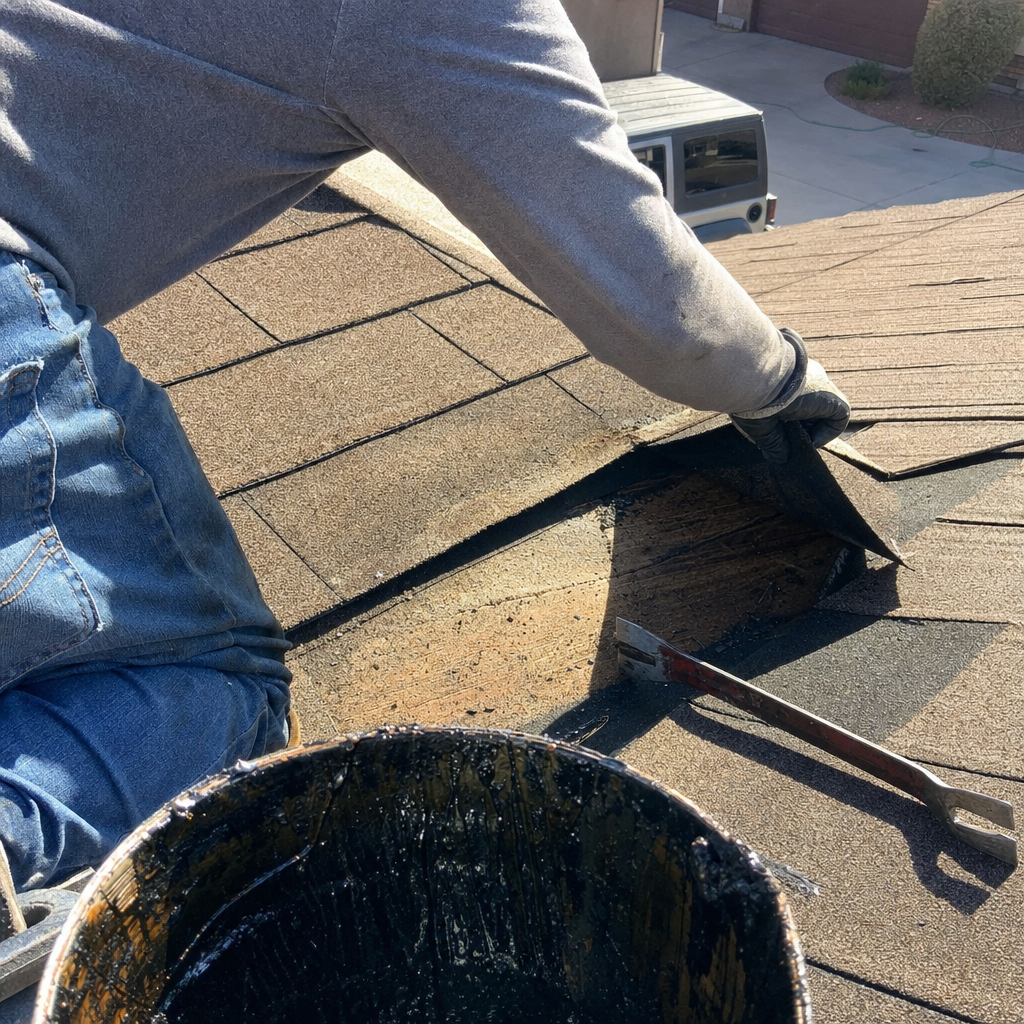
Roof Repair in Spring Valley, NV
If your Spring Valley home is showing ceiling stains after a monsoon surge but every tile on the roof looks perfectly fine, you’re dealing with one of the most common — and most misdiagnosed — roof failures we see in this area. Underlayment failure under mortar-set concrete tile is the dominant repair trigger in Spring Valley’s late-1980s and early-1990s housing stock, and it takes someone who actually knows this neighborhood to find it fast. Our Roof Repair team serves Spring Valley directly — call (725) 237-7255 for a free estimate and we can typically schedule an inspection within one business day.
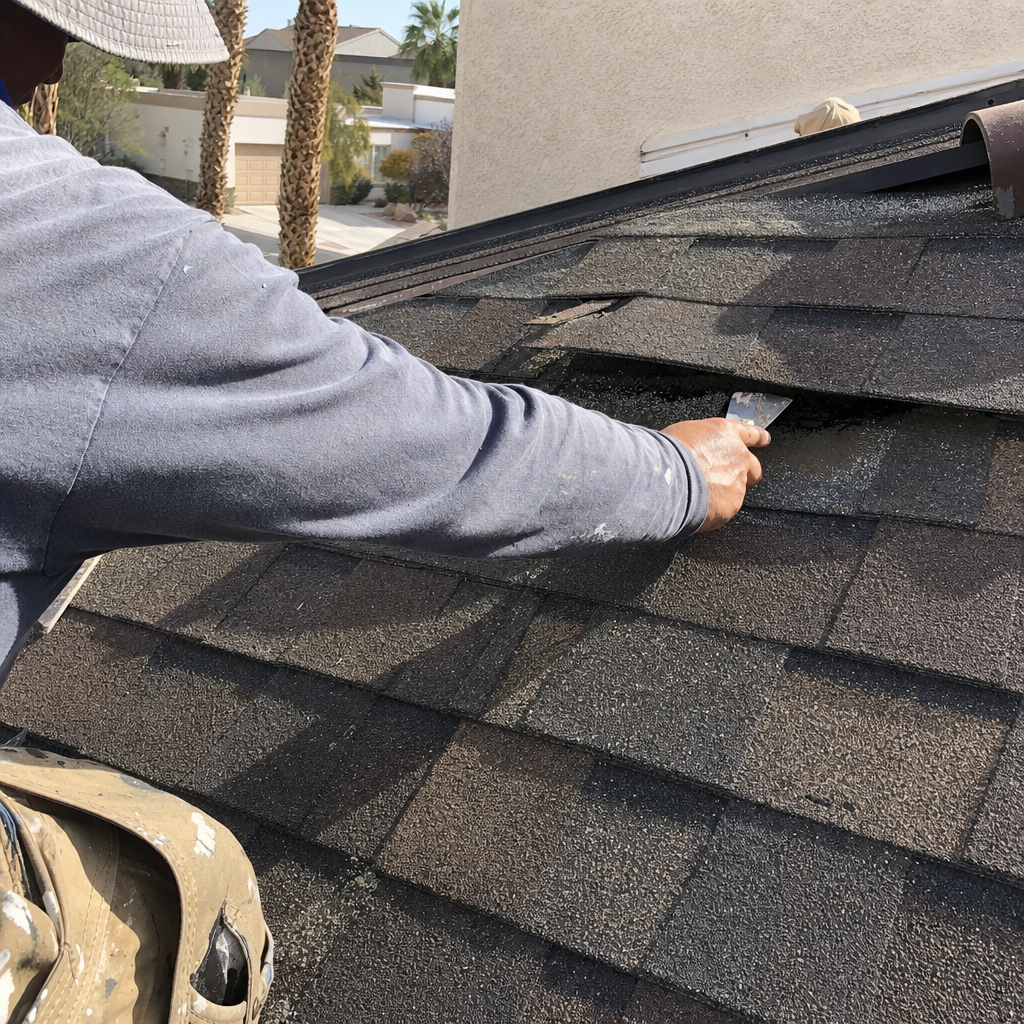
Why All Star Roofing Company Las Vegas Is Spring Valley’s Preferred Roof Repair Company
Santos Cruz has been working roofs across the Las Vegas Valley for 22 years, and Spring Valley’s 89103 ZIP is territory he knows well — the stucco tract homes along Flamingo Road and Rainbow Boulevard, the flat patio-cover sections that sit flush against pitched tile fields, the Clark County permit office that handles all inspections out here rather than City of Las Vegas. When you call All Star Roofing, Santos isn’t dispatching a rotating crew — he shows up himself as Lead Technician. Nearly 120 Spring Valley and Las Vegas-area homeowners have left reviews averaging 4.9 out of 5 stars, not because we make promises, but because the same person who gives you the estimate is the one on your roof the next morning. That level of direct accountability is genuinely rare in this market, and it’s the reason repeat calls from Spring Valley neighborhoods keep coming in.
Our Roof Repair Services in Spring Valley
Leak Repair
Leak diagnosis in Spring Valley is trickier than in most surrounding communities because the failure is often invisible from the outside. On the concrete-tile tract homes that dominate the 89103 ZIP, the tiles themselves can sit undamaged and mortar-set tight while the original 30-year felt underlayment beneath them has baked into brittle, pinhole-riddled paper after decades of triple-digit heat cycles. We conduct tile-up inspections — lifting sections of tile to examine underlayment directly — rather than relying on surface scans that miss internal degradation. We recently pulled a field section on a two-story stucco home in Spring Valley after the owners chased a bedroom ceiling stain for weeks; every tile above was intact, but the underlayment had failed across a two-square section. We replaced the underlayment, reset the Boral concrete tile, re-mortared the disturbed ridge caps, and had it watertight before the next afternoon storm rolled through the valley.

Flashing Repair
Spring Valley’s sustained heat — 70 to 90 days per year above 100°F — expands and contracts roof flashing at chimney bases, pipe penetrations, and roof-to-wall transitions far more aggressively than the national average. That thermal cycling works sealant loose and pulls flashing away from mortar beds, creating water entry points that look minor until July’s monsoon pushes an inch of rain through in 45 minutes. In Spring Valley, we almost always pair flashing repair with a mortar ridge inspection, because the same thermal forces that compromise flashing are degrading the ridge cap beds at the same time. Addressing one without checking the other means a callback after the next storm.

Flat Roof Patch
A large share of Spring Valley’s 1980s–1990s homes have a flat or low-slope patio-cover section running adjacent to the main pitched tile roof — two separate roofing systems on one property. Many of those flat sections were originally finished with spray polyurethane foam, and under Las Vegas Valley UV intensity, the elastomeric top coat loses reflectivity and begins cracking well inside manufacturers’ rated cycles — closer to every 5–7 years in this climate versus the 10-year spec written for milder regions. When that coating fails and monsoon rain arrives, water drives straight into exposed foam and through the ceiling below. We patch compromised foam sections and recoat with a fresh elastomeric layer, and we’ll tell you honestly whether a patch makes economic sense or whether the section needs a full foam reapplication or a modified bitumen overlay.

Shingle Replacement
Shingle roofs are less common in Spring Valley than in newer Las Vegas-area developments, but they do appear on some 1990s-era homes and on additions or covered entries where lightweight roofing was specified. When shingles crack, cup, or granulate in the desert heat, the underlying deck can degrade faster here than in cooler climates. We work across GAF, CertainTeed, Owens Corning, IKO, Atlas, Tamko, and Boral product lines, so material selection is based on your roof’s exposure and slope — not on whatever happens to be on our truck.

Vent Boot Repair
Rubber vent boots on Spring Valley homes crack and shrink from UV exposure faster than almost anywhere in the country. A failed boot around a plumbing vent stack is one of the most common sources of pinhole leaks we find during tile-up inspections in this ZIP. Replacement typically takes under an hour and stops what would otherwise become a spreading moisture problem in the attic decking. It’s a small repair that saves a large one.

Valley Repair
Roof valleys on Spring Valley’s pitched concrete-tile homes channel concentrated water flow during monsoon downbursts. When valley metal corrodes or the mortar detail at valley edges breaks down, water migrates laterally under adjacent tile courses and stains interior ceilings in rooms nowhere near the obvious runoff path. We replace valley metal and re-bed the mortar detail to manufacturer spec — on Boral, CertainTeed, and other concrete tile systems used throughout this area.
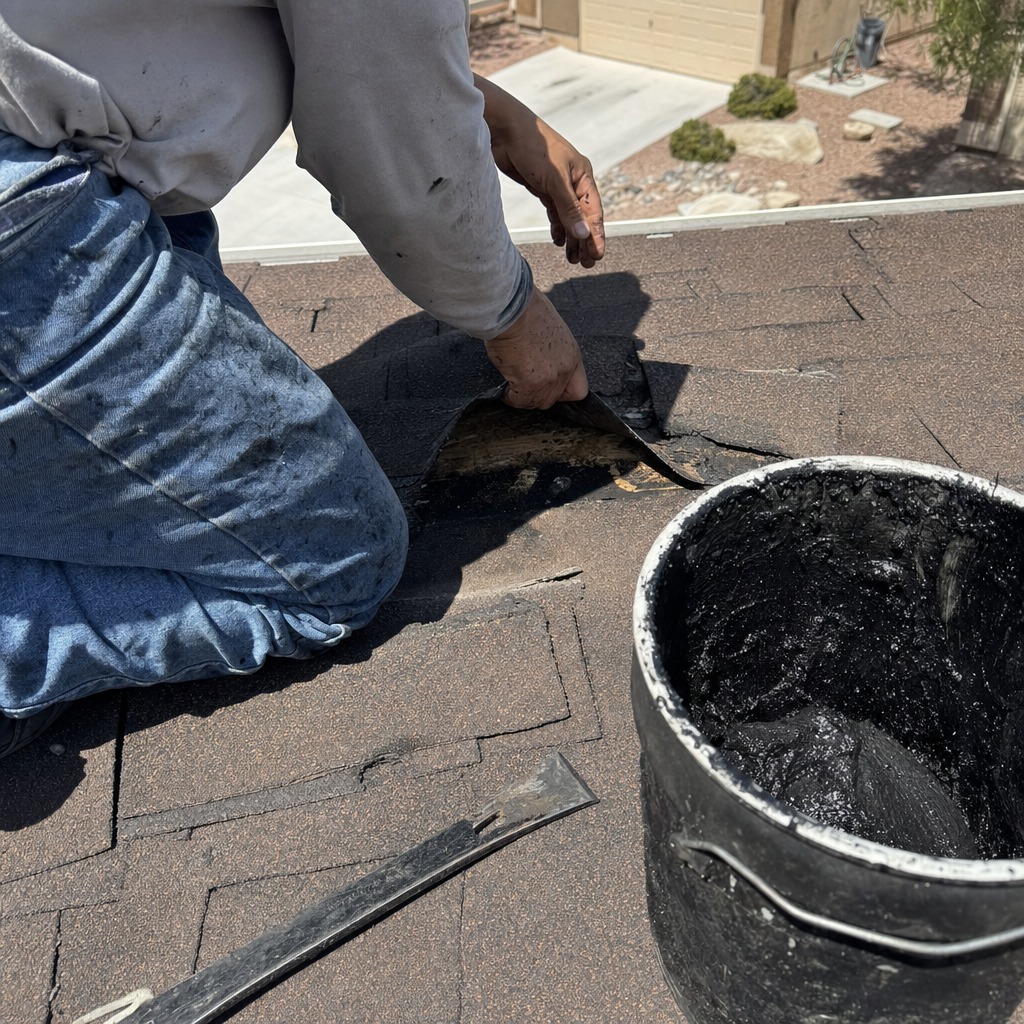
What happens when you call
- 1
A real person answersNo phone trees — you reach a local pro.
- 2
You get an upfront price rangeHonest numbers before anyone is dispatched.
- 3
A background-checked tech heads outLicensed & insured, dispatched right away.
- 4
You approve before work beginsNothing starts until you say go.
Trusted Brands We Service in Spring Valley
All Star Roofing works across seven major manufacturer lines — GAF, CertainTeed, Owens Corning, IKO, Atlas, Tamko, and Boral — which matters in Spring Valley because the housing stock isn’t uniform. A concrete-tile underlayment replacement on a 1989 tract home calls for different materials than a shingle repair on a 1990s addition or a foam recoat on a flat patio cover. Because we’re not tied to a single supplier, Santos selects the right product for each roof’s system, slope, and exposure. For Spring Valley jobs, we source materials locally to keep turnaround tight — most standard repairs are completed in a single visit.
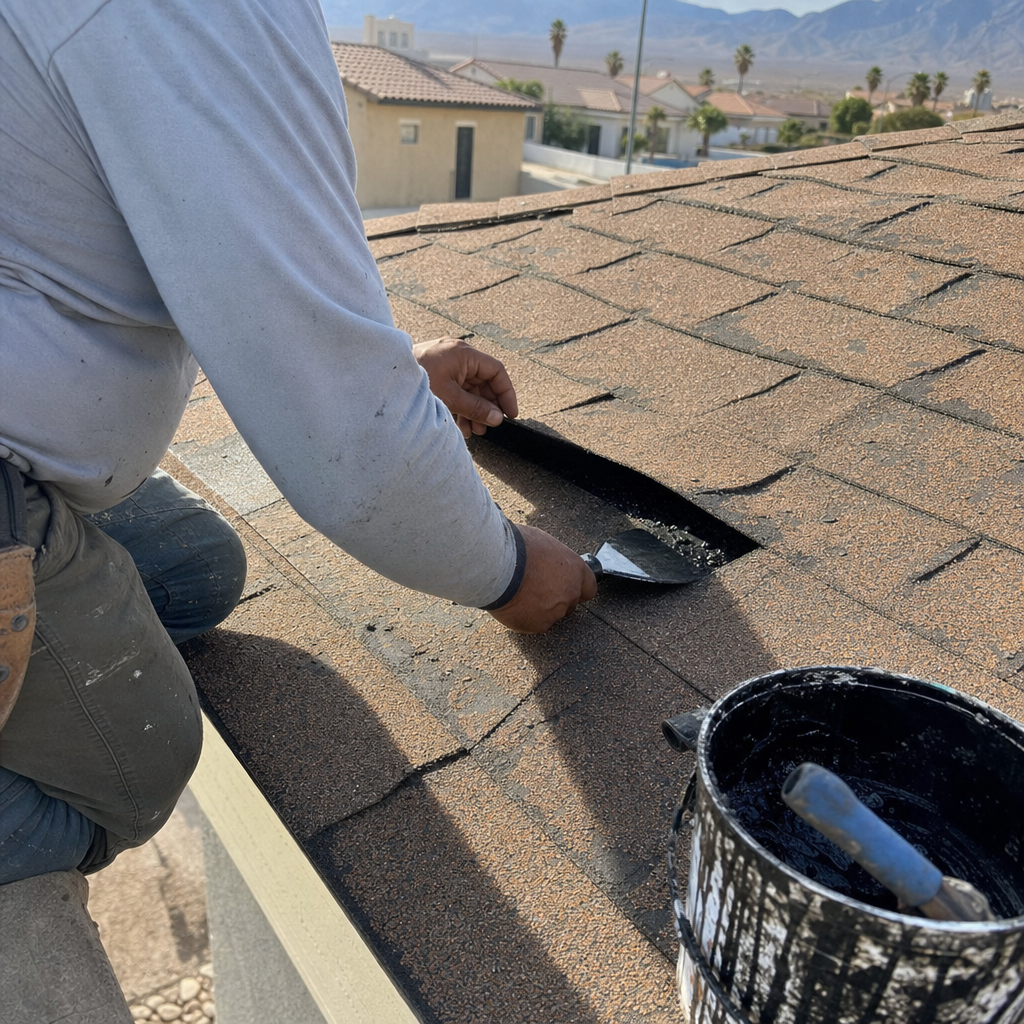
Common Roof Repair Problems We See in Spring Valley Homes
- Underlayment silent failure beneath intact concrete tile: The original 30-year felt underlayment on Spring Valley’s 1980s–1990s concrete-tile homes has reached — and in many cases passed — its service life. Because the tiles above are still in place and visually undamaged, homeowners often spend weeks chasing phantom leak sources before a tile-up inspection reveals the true culprit: brittle, pinhole-riddled felt that has been baking under triple-digit heat for three decades.
- Monsoon ambush on degraded flat patio-cover sections: Spring Valley’s spray polyurethane foam patio roofs lose their protective elastomeric top coat under Las Vegas UV intensity on a roughly 5–7 year cycle — faster than most manufacturer specs anticipate. When the July–September monsoon arrives after a long dry summer, it drives rain directly into cracked and exposed foam, producing leaks in living spaces that feel sudden but have been building all season.
- Cracked mortar ridge caps from thermal cycling: Seventy to ninety days above 100°F every year expand and contract mortar ridge-cap beds until they fracture, lifting tile edges and opening wind-driven rain entry points along the peak. This failure mode is almost exclusive to the mortar-set concrete-tile neighborhoods that define Spring Valley’s residential footprint — it doesn’t show from the street and doesn’t respond to flashing repair alone without re-mortaring the ridge line.
- Dual-system complexity — pitched tile meets flat foam on the same property: Many Spring Valley homes require two separate repair approaches in a single visit: one for the main pitched concrete-tile field and a second for the flat patio-cover section at the rear or side. Missing the flat section during a leak call is a common reason repairs fail to hold — water that appears to come from the pitched roof is sometimes tracking from a failed foam section running beneath the tile’s drip edge.
Pricing for Roof Repair in Spring Valley, NV
Spring Valley roof repair pricing reflects both the job type and the Clark County permit requirements that apply in this unincorporated area. Here are current working ranges for this market:
- Vent boot replacement: $150–$300 per boot
- Flashing repair (chimney, wall, or pipe penetration): $250–$600 depending on scope and re-mortaring required
- Flat roof patch (foam section recoat or modified bitumen patch): $400–$1,200 depending on square footage and coating condition
- Valley repair (metal replacement and mortar re-bed): $350–$800
- Tile-up underlayment replacement (partial field): $900–$2,800 depending on affected squares and tile reset complexity
- Leak diagnosis and repair (minor, single source): $200–$500
- Full shingle section replacement: $350–$900 per square
Clark County Building Department permit fees for roofing work in Spring Valley add to the total and vary by project scope — Santos will walk you through the current fee schedule when we assess your roof, so there are no surprises on the final invoice. Estimates are free. Call (725) 237-7255 and we’ll give you an accurate number after we’ve seen the roof.
Spring Valley’s Clark County Permit Process — What Homeowners Need to Know
Spring Valley is an unincorporated Clark County community, which means every roofing permit and inspection runs through the Clark County Building Department — not the City of Las Vegas — with its own fee schedules, inspector pools, and code-adoption timeline. This distinction catches homeowners off guard when they hire contractors familiar with Las Vegas city permit offices but less experienced with Clark County’s separate process. On a tile-up underlayment replacement in Spring Valley, pulling the right permit and scheduling the correct county inspection isn’t optional — it’s what protects your homeowner’s insurance coverage and ensures the work passes to current code. Santos has navigated Clark County’s permit process on Spring Valley jobs throughout his 22 years in this valley. We handle the paperwork, coordinate the county inspection, and make sure the job closes correctly.
We Also Serve Cities Near Spring Valley
All Star Roofing serves homeowners throughout the Las Vegas Valley, including Las Vegas, Summerlin South, North Las Vegas, and Sunrise Manor. If you’re outside Spring Valley but dealing with a similar concrete-tile or flat-roof issue, the same direct, owner-on-the-job approach applies wherever we work. Call (725) 237-7255 to confirm coverage for your address.
Serving Spring Valley, NV — Our Local Coverage Area
We’re based in the Spring Valley area and know this community well. Use the map below to see our service coverage — if you’re nearby, we can almost certainly help.
FAQs — Roof Repair in Spring Valley
Intact tiles are not proof the roof is sound — the underlayment beneath them is the actual waterproofing layer, and it fails first. On Spring Valley’s 1980s–1990s concrete-tile homes, the original 30-year felt underlayment has been baking under triple-digit heat for decades and is now developing pinholes across entire roof fields. The tiles stay in place, mortar-set and undamaged, while the felt beneath them has become essentially brittle paper. The first hard monsoon rain pushes water through those pinholes and into your ceiling. A tile-up inspection — where we lift sections of tile to examine underlayment directly — is the only reliable way to find this. Call (725) 237-7255 and we can schedule that inspection fast.
Roofing permits in Spring Valley run through the Clark County Building Department, not the City of Las Vegas. Spring Valley is an unincorporated community within Clark County, so it operates under a separate permit office, fee schedule, and inspector pool from the incorporated city. This matters because some contractors pull Las Vegas city permits out of habit and don’t realize Spring Valley requires county filings — which can leave a job unpermitted or create problems during a future home sale. We file with the correct Clark County office for every Spring Valley job.
At Las Vegas Valley UV intensity and heat levels, the elastomeric top coat on spray polyurethane foam patio roofs typically needs recoating every 5–7 years — significantly shorter than the 10-year cycle most manufacturers spec for milder climates. If the coating has gone chalky, cracked, or lost its white reflectivity, it’s no longer protecting the foam beneath it, and the next monsoon season will expose that. The recoat itself, on a standard Spring Valley patio-cover section, runs roughly $400–$1,200 depending on square footage and current coating condition. Catching it before the foam is exposed keeps cost down considerably. Call (725) 237-7255 for an honest assessment of where your coating stands.
Yes — cracked mortar ridge caps are a targeted repair, not a replacement trigger, as long as the tile field and underlayment beneath are still sound. The repair involves removing the lifted or loose ridge tiles, grinding out the failed mortar bed, applying fresh mortar, resetting the tiles, and allowing proper cure time. On Spring Valley homes, we almost always inspect the adjacent underlayment while the ridge section is open, because the same thermal cycling that fractures mortar also degrades felt — finding one problem while we’re already on the roof saves a second mobilization later. Ridge cap re-mortaring in Spring Valley typically runs $250–$600 depending on linear footage and access.
They do, and treating them as the same system is one of the most common reasons roof repairs in Spring Valley fail to hold. The pitched concrete-tile field requires underlayment inspection, mortar ridge assessment, and tile-specific repair techniques. The flat patio-cover section — usually spray polyurethane foam on homes from this era — requires elastomeric coating evaluation, foam integrity checks, and either recoating or a modified bitumen overlay depending on condition. We assess both systems in a single visit, give you separate scopes and pricing for each, and coordinate the Clark County permit to cover all work on the property. Call (725) 237-7255 and Santos will walk the full roof with you.
Reviewed by Santos Cruz, Owner and Lead Technician at All Star Roofing Company Las Vegas, serving Spring Valley, NV and the greater Las Vegas Valley since 2003.